
Prof. Amos Kabo-Bah Champions Climate Intelligence and Open Data for Africa in Panel Discussion at NewSpace Africa 2026
3 days ago, on
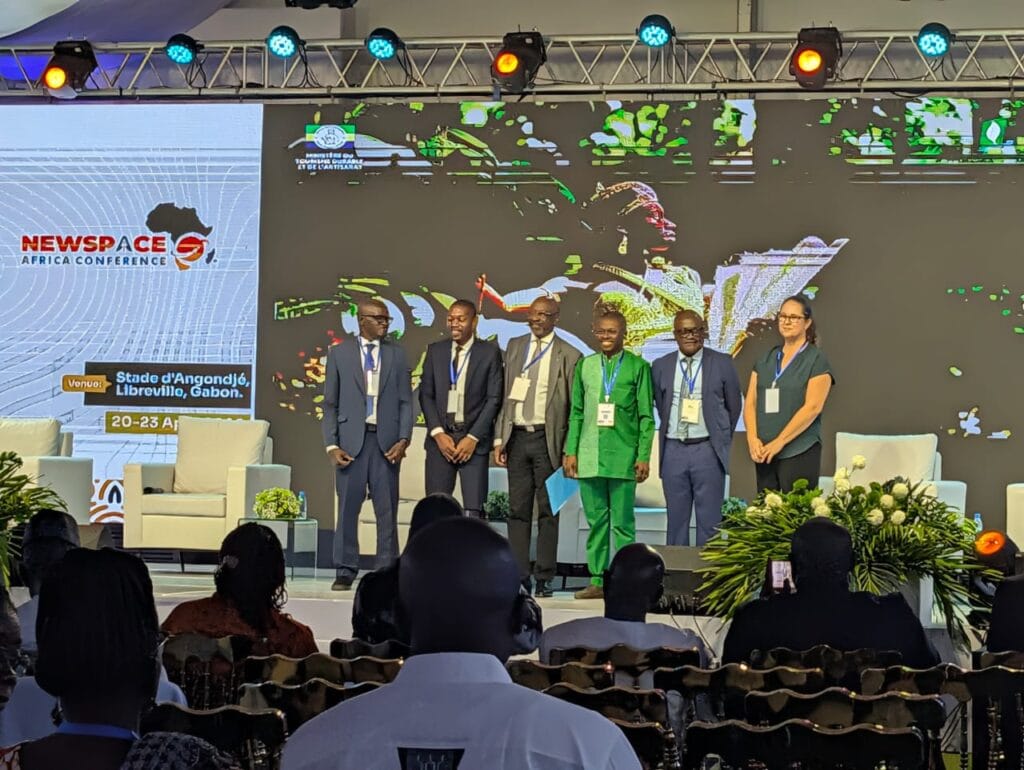
Prof. Amos T. Kabo-Bah, Dean of International Relations at the University of Energy and Natural Resources (UENR), delivered a landmark presentation at the NewSpace Africa 2026 Conference in Libreville, Gabon, on Thursday, 23 April 2026. Speaking during the high-profile “Space Applications and Natural Capital Monitoring” session on Day 4 of the conference, Prof. Kabo-Bah presented to an audience of space agency directors, industry leaders, policymakers, and researchers from across Africa and the global space community.
His presentation, centred on building climate intelligence for Africa, drew on the transformative work being undertaken at EORIC as a foundation for advancing in-situ climate research, Earth observation, and cross-border scientific collaboration. Prof. Kabo-Bah showcased EORIC’s infrastructure portfolio, spanning satellite data reception facilities, carbon monitoring towers, hydrological sensor networks, and AI-powered data analytics platforms as a working model of how African universities can anchor continental climate intelligence systems. He emphasized that EORIC is not merely a research facility but a living demonstration of how institutional investment in Earth observation infrastructure can generate actionable insights for water resource management, land degradation monitoring, forest cover assessment, and climate adaptation planning across West Africa and beyond.
A central theme of the presentation was the urgent need to connect every African to every corner of the continent through reliable internet infrastructure and a stable, affordable energy supply. Prof. Kabo-Bah argued compellingly that without universal digital and energy access, the transformative potential of space-derived data and climate intelligence cannot reach the communities that need it most. In this regard, he highlighted the Regional Centre for Energy and Environmental Sustainability (RCEES) at UENR as a champion institution for training the next generation of African professionals in practical skills for reliable, low-cost energy systems. He presented RCEES as a model for how African universities can build human capital that directly supports the energy infrastructure needed to underpin digital connectivity and satellite data utilization at the community level.
Prof. Kabo-Bah also shared an exciting emerging initiative: UENR’s partnership with the West and Central African Research and Education Network (WACREN) in 2026 to develop and deploy low-cost, IoT-enabled weather stations and LoRaWAN gateway infrastructure across the region. This initiative, he explained, represents a practical and scalable approach to closing the critical data gap in Africa’s climate observing networks, enabling real-time meteorological data collection even in remote and underserved communities at a fraction of the cost of conventional systems. The integration of IoT sensors with LoRaWAN gateways, he noted, offers a pathway to building a dense, affordable, and locally maintained climate observation network that can feed into national and regional climate services.
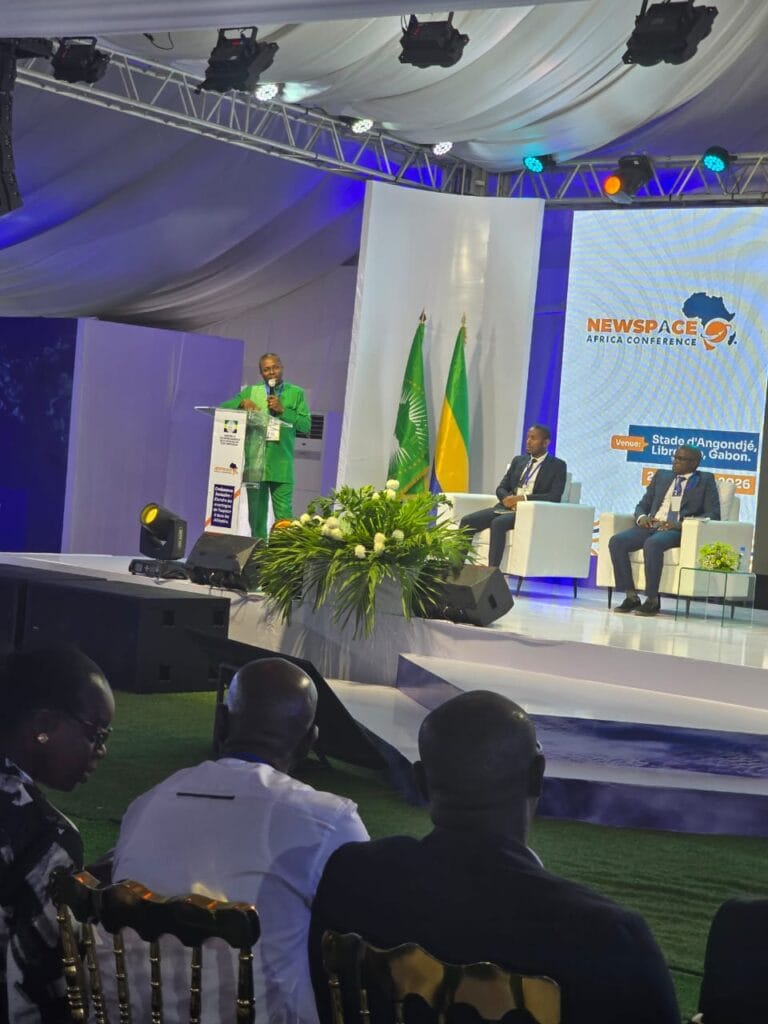
One of the most applauded moments of the session came when Prof. Kabo-Bah issued a direct and impassioned call to the African Union to support member states in establishing a unified continental data-sharing portal for publicly relevant geospatial and climate datasets. Drawing on the example of the European Union’s Copernicus Programme which makes Earth observation data freely and openly available to governments, researchers, businesses, and citizens across Europe, he made the case that Africa must develop an equivalent framework tailored to its own development context. He noted that while sensitive national security and military datasets could appropriately be excluded from such a portal, the vast majority of climate, land, water, and environmental datasets collected across the continent should be open, interoperable, and accessible to all stakeholders.
The need for such a unified data architecture is particularly acute, he argued, because Africa’s major river basins, including the Niger, Volta, Congo, Zambezi, and Nile, are inherently transboundary in nature, flowing across multiple sovereign states and requiring coordinated, cross-border data sharing to support effective water governance, flood early warning systems, and drought resilience planning. The current fragmentation of data systems across national boundaries, Prof. Kabo-Bah contended, undermines the very continental climate intelligence that African governments need to make evidence-based policy decisions. His call for an African Copernicus equivalent was met with positive and enthusiastic remarks from the audience, reflecting the resonance of his message across a diverse community of African and international space actors.
Prof. Kabo-Bah’s presentation positioned UENR not only as a research institution but as an active architect of Africa’s climate intelligence future, contributing scientific evidence, practical infrastructure models, and bold policy advocacy to the continent’s space and sustainability agenda. His remarks at NewSpace Africa 2026 further cement UENR’s reputation as a thought leader at the intersection of Earth observation, climate science, digital connectivity, and sustainable development in Africa.
Leave a Comment